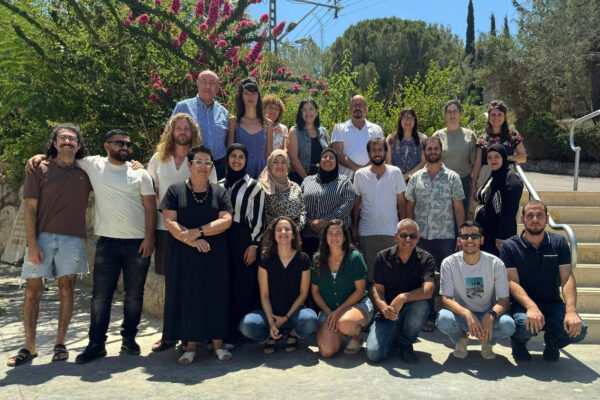
The facilitators’ course taught in the WASNS School for Peace is one of the more intensive courses offered in the SFP, with meetings nearly every week and intensive several-day seminars. While it teaches participants the skills needed to facilitate dialogue in binational groups, not everyone who completes the course does so with the intention of becoming a professional facilitator. We spoke with two out of 23 participants in the facilitators’ course that recently ended.
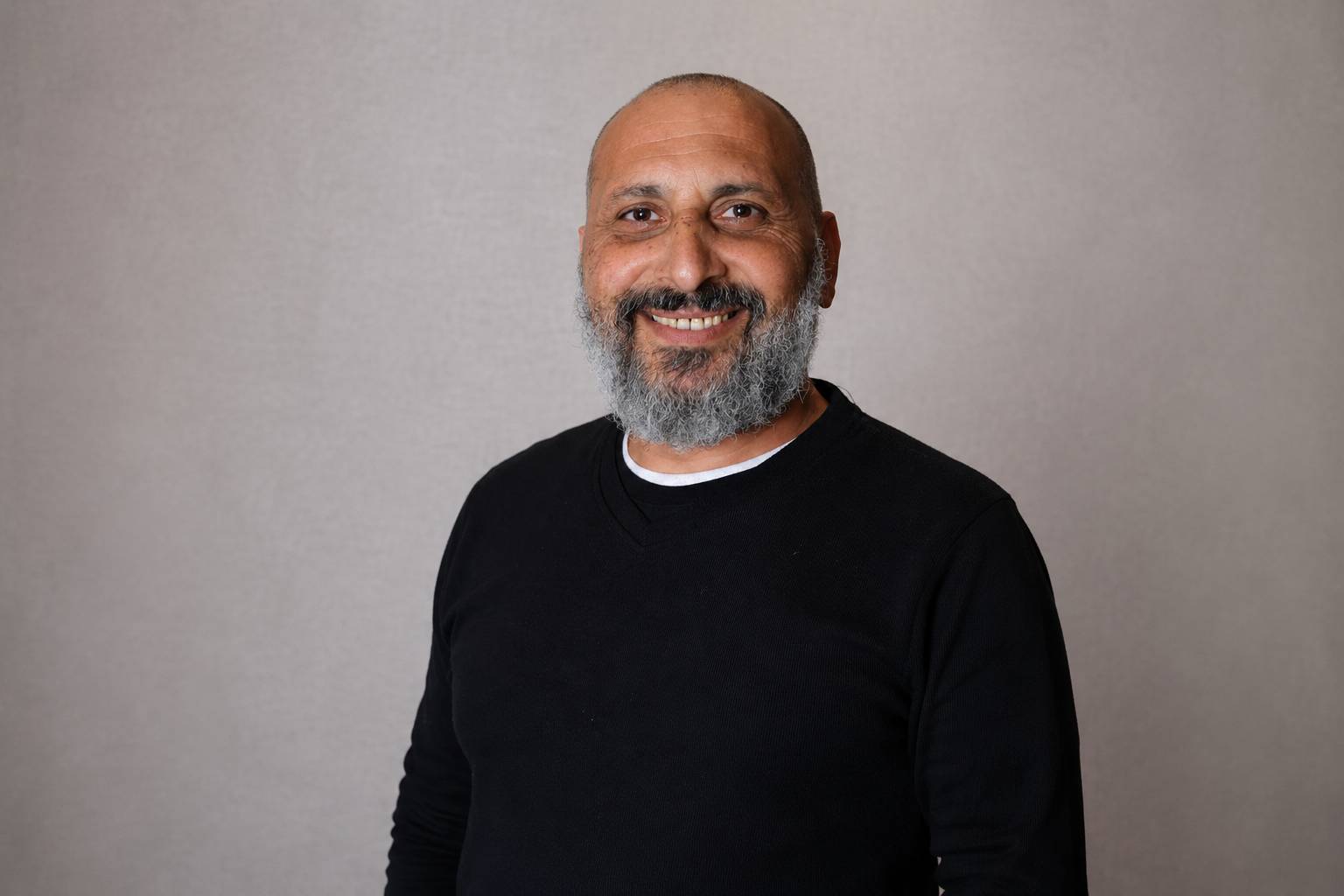
Yahel is a social worker who has worked in East Jerusalem as well as working for the Mandel Foundation managing the alumni program. Muhammad is an electronic media professional and member of the C&D department who grew up in the village.
Yahel: I did not know anything about Wahat al-Salam – Neve Shalom and had never heard of the School for Peace. When I got the invitation to the course through a WhatsApp group, I was curious. I hoped it would be an opportunity to be able to speak openly with others, without the barriers that normally arise. I thought it would offer me a way to be a part of a process I wanted to participate in – to be able to speak about peace in a constructive way. And I wanted to strengthen my facilitation skills.
Muhammad: Many of the courses were attractive to me. The SFP dialogue facilitators’ course was the most relevant at the time. In addition, the variety of skills which are offered in the course made the most sense to me on both the personal and the professional levels.
Even as a member of WASNS, its tradition, and spirit, that doesn’t necessarily mean that I’m well versed in the “dialogue” approach. A multitude of approaches are used to facilitate some of the village meetings held for different purposes.
Yahel: It was very intensive. We met nearly every week, sometimes several days in a row or a whole weekend. But what I learned each week would stay with me, in my mind, processing each session the whole week. The SFP felt removed from the real world, and then I would connect what I had heard that week to the reality around me. You could say the course also sparked a sort of dialogue with myself.
Muhammad: Being a member of WASNS familiarizes you with the overall way in which the course is offered. I can’t say that I’m wholly surprised in any way, but delving deeper into the reasoning, thinking, and psychology behind the different concepts of opening up a discussion opportunity between different sides was a new way of looking at something present in my daily life.
Yahel: On the personal level, there were a lot of interesting people, of all ages and from all kinds of backgrounds. That was very enriching.
Muhammad: The most interesting sessions were the participant-led dialogue meetings. Every participant had an opportunity to lead a meeting through an approach of their choosing. Some were mellower than others, but the more significant discussions took place after opening up the floor for deeper emotions to be expressed, such as anger, sadness, misery, and despair in regards to the past, current, and most importantly, future of our region. It is very refreshing to see a process of real change take place real-time in an outside group. You get a glimpse of how the outside world looks at the village.
Most of the meetings were binational but there were two, maybe three uni-national meetings. These were a great opportunity for those who don’t have the linguistic ability to express themselves in the other meetings to show their “true” emotions. Those meetings exposed me to an even deeper level of complexity taking place within our meetings, one of the disadvantaged trying and fit in with the majority, and when opportunity presents itself, they are usually the first to express discontent about their position within the group.
Yahel: The course exceeded all my expectations. Everyone was fantastic – Michal and Ibrahim, the course facilitators, and the entire SFP staff. I feel I still have a long way to go. But I really got the feeling of a movement, that things are moving, and that there is an opening for action and for larger dialogue.
The course strengthened my insights and understanding. It was really an opportunity to hear people speak freely, while in other situations they may be afraid to speak their minds.
Muhammad: The course teaches participants by simulating a dialogue with its own participants, meaning we as a group went through many dialogue sessions and discussed them as a way to learn about the invisible subtleties taking place within a session.
I very much acquired new skills which I may, in the future, utilize in professional settings. More importantly however, personally I found new techniques of searching for inner peace during the toughest of conversations throughout life.
Yahel: The skills I learned will be helpful, both in my job as a social worker (I speak Arabic), and in the Mandel foundation. The insights I gained can be useful in situations where I now might have a better idea of what people are not saying to me.
Now that I know about the SFP, I want to deepen my connection. Maybe I’ll do another course in the future.
Muhammad: Hopefully opportunities do present themselves where I can put these new skills into practice. I find it hard to believe that at the very least professionally, my acquired knowledge and experience won’t be put to good use.