The first half of the school ended in January, and the kids got their mid-term certificates. For the first-graders. It was a rite of passage and an important milestone on their educational careers.
The first-graders began a new HOTAM subject – people and the Earth. For them, the first concept was locating themselves in a much more local context – “me and my home.” They investigated their homes, what they contain and their place within, and then they drew pictures of their homes to share with the class.
In second grade, math was the fun subject. They started lessons in geometry by learning to distinguish edges and angles. They were then presented with a 3-d shape – a cylinder. There ensued a lovely discussion as the cylinder got passed around the classroom. For example, what would it look like if it were opened up and laid flat, into a 2-d shape?
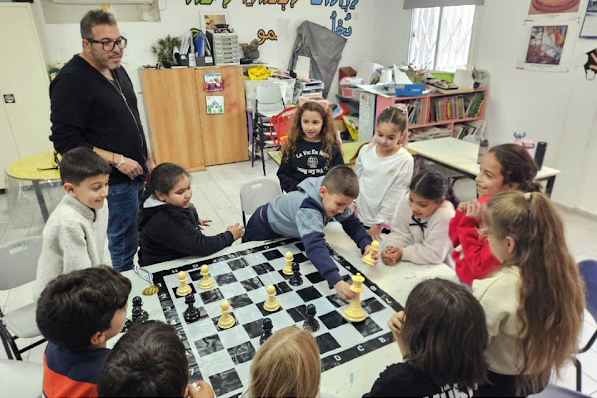
The second-graders have also started project chess – every Wednesday, they learn to play chess. Chess, they are learning, is full of life lessons on strategy and how one small move ripples into the future.
These youngsters also have a tradition – every month they celebrate all the birthdays of that month, a meal together and cake and singing.
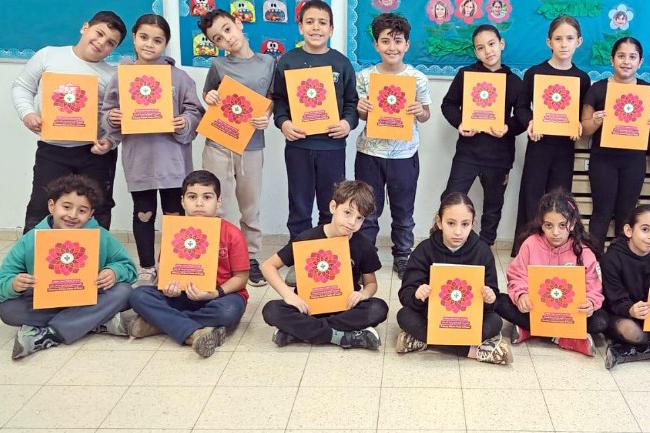
Math is still fun in third grade. Geometry lessons involved a game in which groups of kids sorted cutout triangles by type – isosceles, right-angle, etc. Language is always an important subject, no matter what lessons are being taught.
The kids learning Hebrew as a second language learned how roots tie all sorts of words together. With games and activities, they found they could grasp the principles of figuring out the meanings of words by looking for their roots.
In the fourth grade, the student whose mother tongue is Hebrew worked on deciphering sayings. First looking them up on the computer, the kids then drew pictures and wrote explanations about a chosen saying. These went up on a “saying” board in the classroom. The Arabic-mother-tongue kids learned about descriptive text and they practiced by creating “leaf diaries” in which they glued leaves they had collected and described each one by it’s defining characteristics.
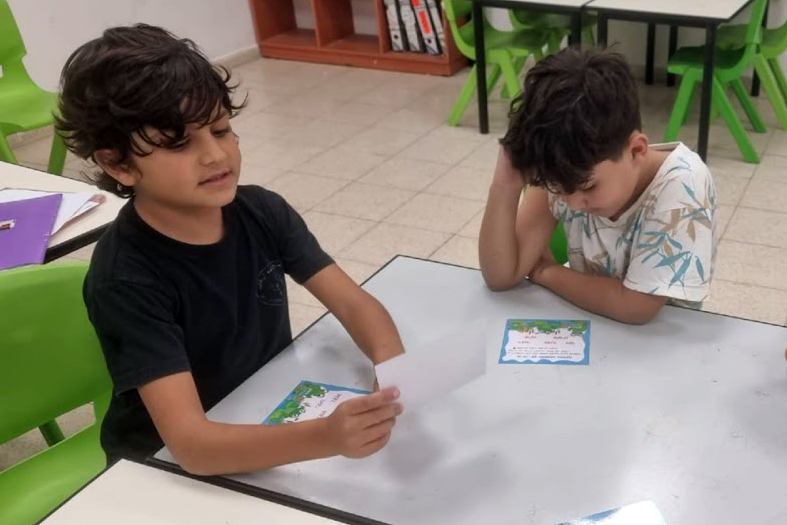
The fourth-graders also had a sort of science fair in which they created dioramas and explanations about the living environment and innovation inspired by nature.
The fifth-graders learning Arabic as a second language focused on clothing, describing their favorite piece of clothing in Arabic and then writing an ad or slogan about that piece of clothing. This gave them a chance to get creative and talk about themselves using their Arabic vocabulary. For lessons in Hebrew as a mother tongue, they learned about folk tales. They learned to identify this kind of literature – handed down through generations and holding morals, lessons and wisdom that are applicable today. Then the kids wrote their own folk tales, which, the teachers reported, was not only enjoyable, but encourages them to read and write more.
The sixth graders learning Hebrew as a mother tongue turned to the folk takes of a different county – those of Greek mythology. They learned, among other things, how the Greek mythological characters still influence thinking and story-telling today. At the end of the section, each student chose a mythological being and reported on them, including their personal reflections and feelings of connection with their story.
The sixth-graders are all working on their English, which focused on the concept of countable and uncountable nouns.
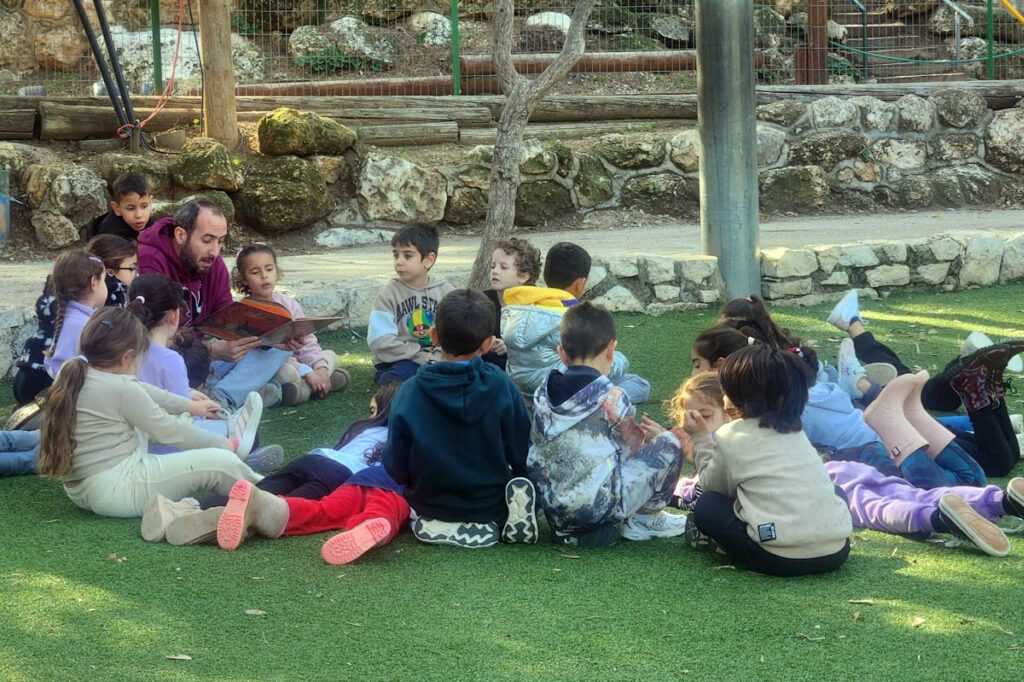
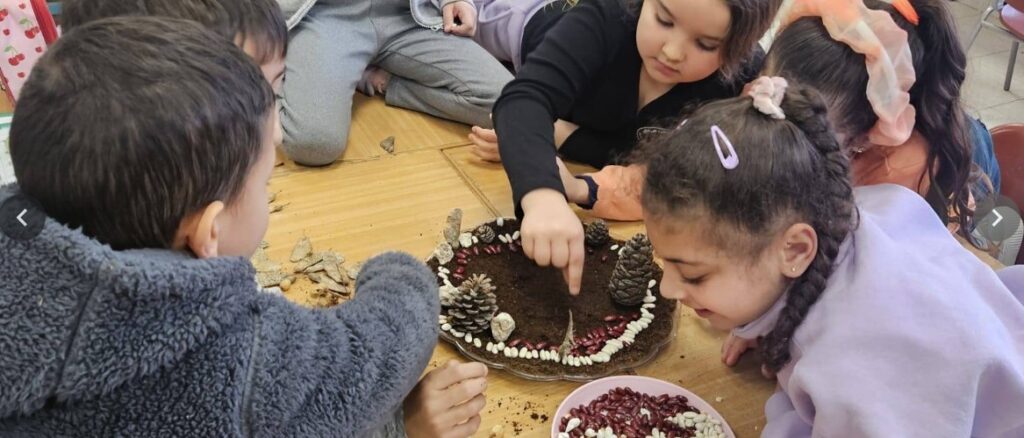
HOTAM: The opening and closing of a section of the HOTAM Education, culture, Tradition curriculum call for special activities. The section that opened in January – People and the Earth – give the students a chance to contemplate their personal and cultural relationships with the planet Earth and with the environment. The third-graders opened the section with a presentation to the school on the importance of the Earth to humans, giving examples of all the things given to humanity by the Earth. Afterwards, the activities included group invention – creating mandalas from natural materials.
The third and fourth graders also worked on finding small acts to preserve the nature in their surroundings. To express the idea that each of them can contribute, they got a diagram of the Earth, to which they added their drawings of ideas for conservation, thus reinforcing the idea that saving the Earth is the responsibility of each and every one, and that they have a role to play.
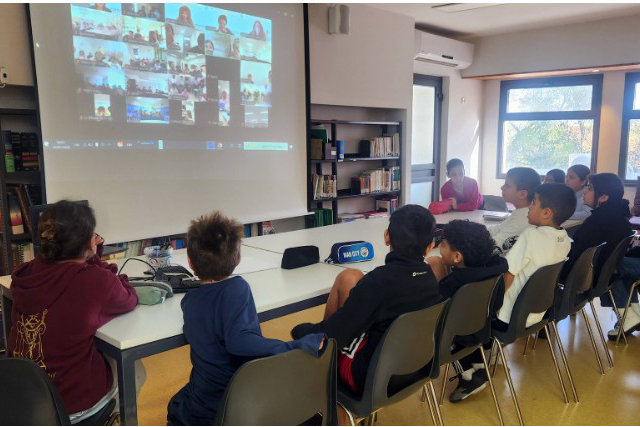
Hebrew language day fell in January, and the entire student body celebrated, as is their tradition, with games, quizzes and creative activities. They also had a book exchange in which the students bought old books and took home ones that were new – to them.
The student council had a meeting with other student councils across two regions. This gave them plenty of food for thought as to what to plan for the rest of the school year. For now, they are planning a costume exchange for Purim costumes.
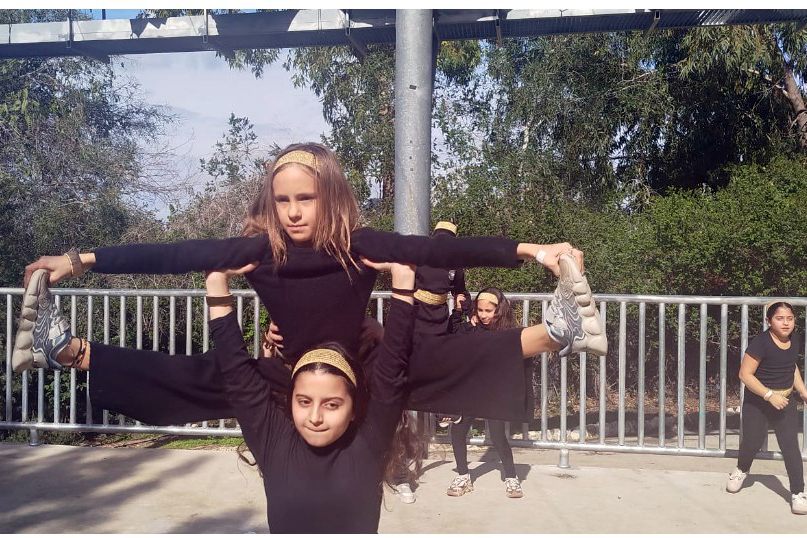
Hip-hop: The talented hip-hop class gave a performance for the entire school.