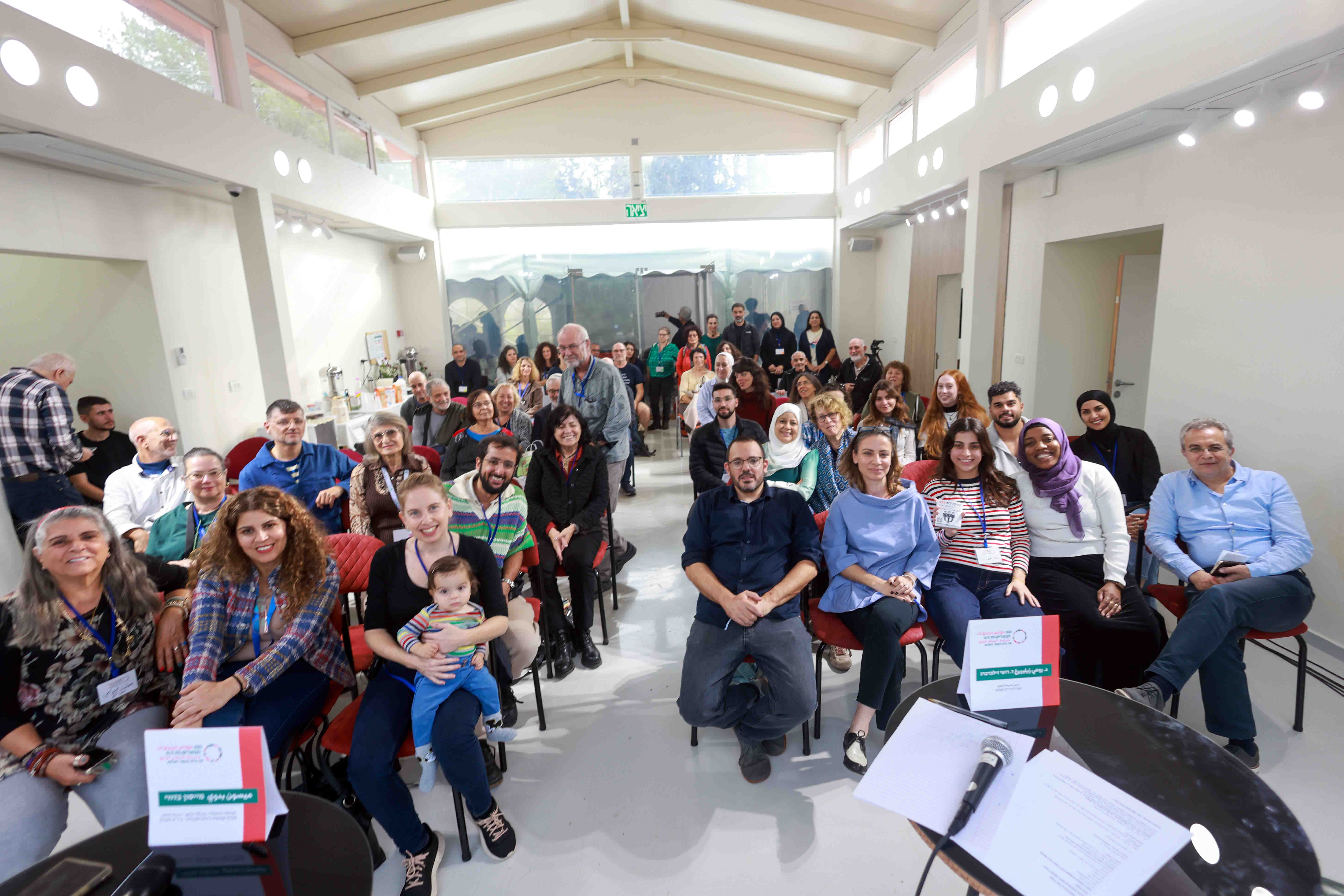
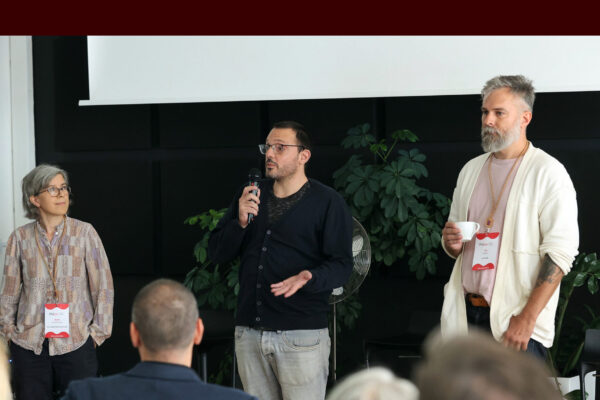
Academic staff from 11 different institutions met for an immersive day of learning in the School for Peace. On the table was the question: How can Palestinians and Jews cooperate in an academic setting, in the current situation, to create an atmosphere of trust, equality and safety for all?
Prof. Teresa Koloma Beck, a sociologist from Helmut Schmidt University in Hamburg, Germany, gave a guest lecture on safety – the safety of routine in which personal identity and expression are repressed, vs the kind of safety in which all feel safe in revealing personal identity and opinions. Afterwards, there was a discussion on the “Gaza Initiative” in Hebrew University, which is an effort to make the toll of the war in Gaza visible to students, and dialogue groups that focused on building a path to true partnership.
Mental Health
Mental health has become a pressing issue for large numbers of people, even as budgets are cut and mental health professionals find themselves overwhelmed and dealing with the entire gamut from increased anxiety to severe trauma. But mental health, including everything from training to language to the settings, access and services offered, cannot be effective until its practitioners are fully sensitive to the cultural and political factors underlying the overt issues.
With this in mind, the School for Peace has begun several initiatives. Alumni of previous mental health courses have met several times for lectures and dialogue sessions to help strengthen their network and improve their abilities to deal with the new kinds of trauma they are seeing.
A new course has held its initial meetings: The Change Agents course for Mental Health professionals uses dialogue between Palestinian and Jewish professionals to explore the social and political issues – identity, collective trauma, ethics – that will inform their practice and lead to social activism in the field.
In addition, a new group initiated by the School for Peace and the Ma’ana Center – Nazareth Hospital brings together Palestinian and Jewish therapists to examine how political realities shape therapeutic roles and to explore the creation of treatment spaces that confront oppression.
What’s in a word?
The language we use to discuss the “situation” shapes not only the conversation on current events, but the very way we think and feel about what is happening around us. That is, in order to steer the conversation away from violence and conquest, we must first investigate the very words we use to describe our reality.
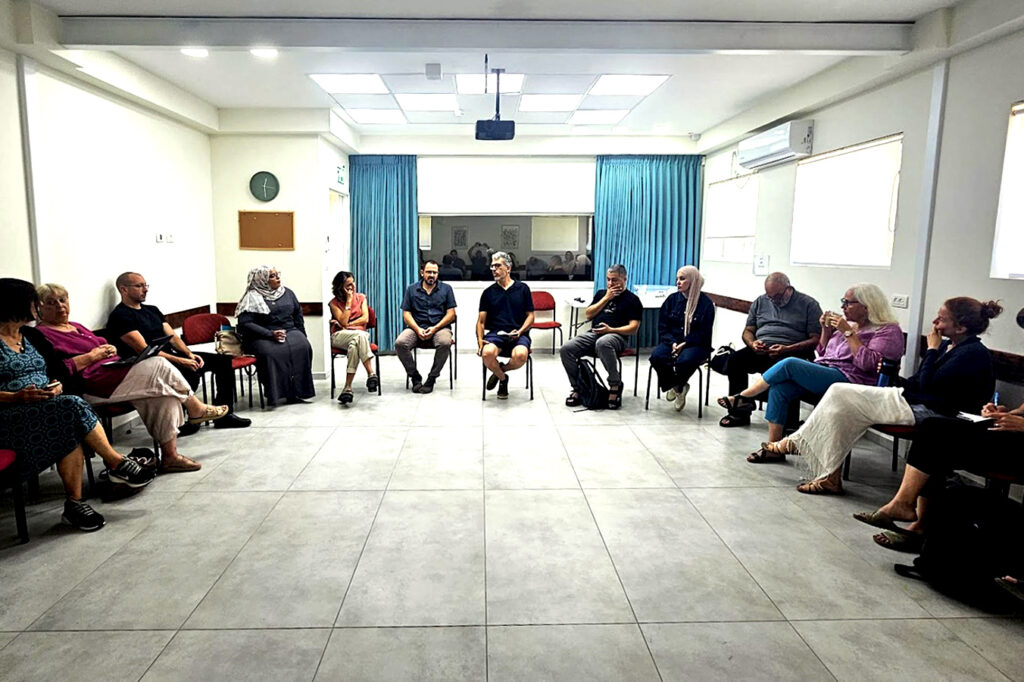
The School for Peace has been offering terminology workshops to help people talk about the conflict in a constructive, non-threatening, non-offensive manner. Three workshops were offered, so far, in Germany and the Czech Republic, with artists, educators and advocacy groups.
Unifying Palestinians
The first meeting of the Unified Palestinian Dialogue program took place in July. This program, consisting of three long week-end meetings, brings together Palestinians from inside, outside an on the Green line (West Bank, Jerusalem, 1948 territories). Each group has a distinctly different experience, and the sessions help them comprehend what ties them together as a group, how oppression separates them and to engage in frank dialogue on their common and separate identities.