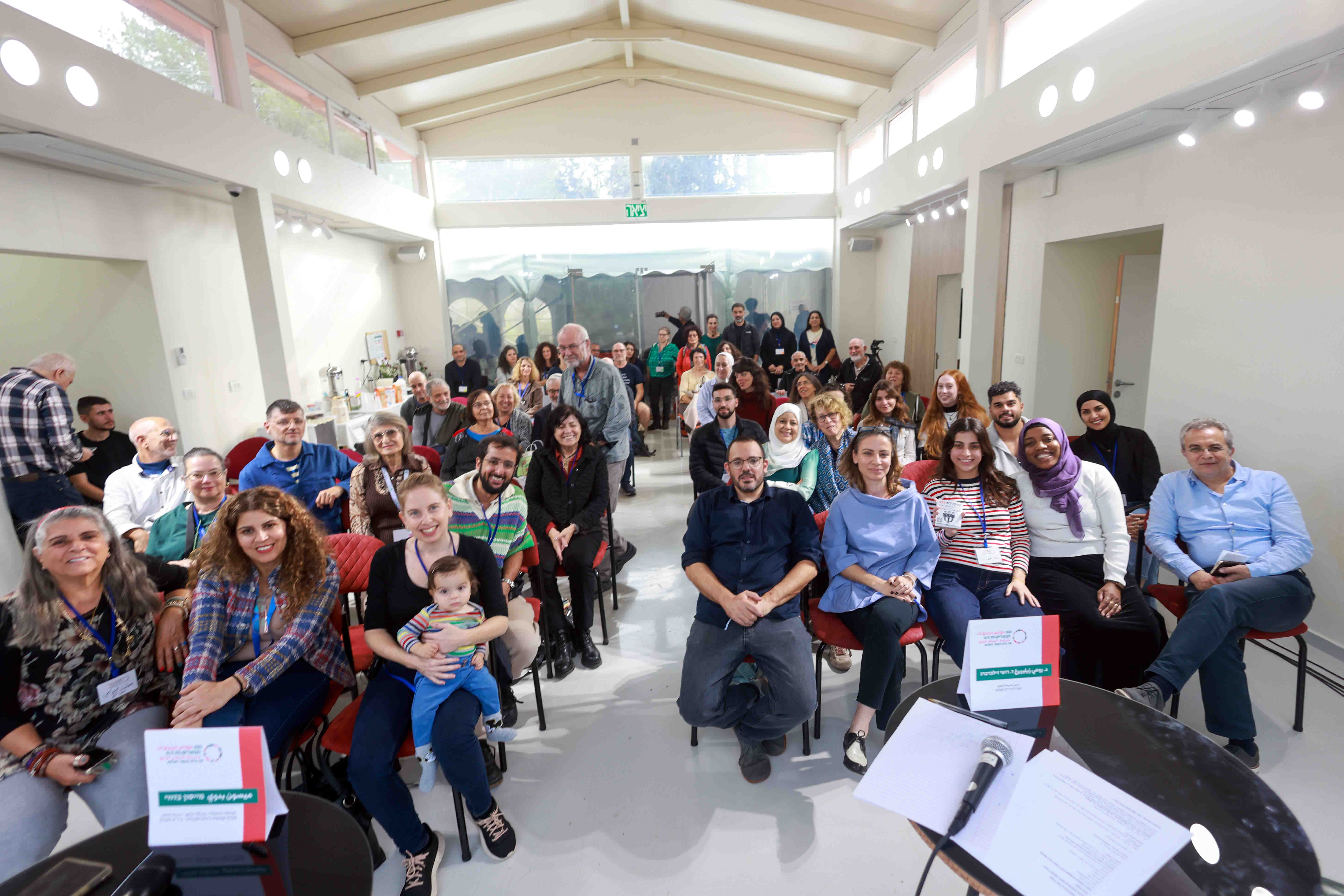
Life in an ongoing catastrophe – Between dispossession and erasure, and building influence was the subject of the School for Peace Alumni conference held in December. Some 97 participants came, from early SfP courses and recent ones. “It was a chance for them to meet one another, and for the alumni of university courses to meet those who had completed dialogue courses here in the SfP,” said Faten Abu Ghosh, SfP alumna and office manager.
Over the course of a challenging, thought-provoking, intensive 22 hour weekend conference, the participants engaged in dialogue, listened to talks and heard from their fellow alumni.
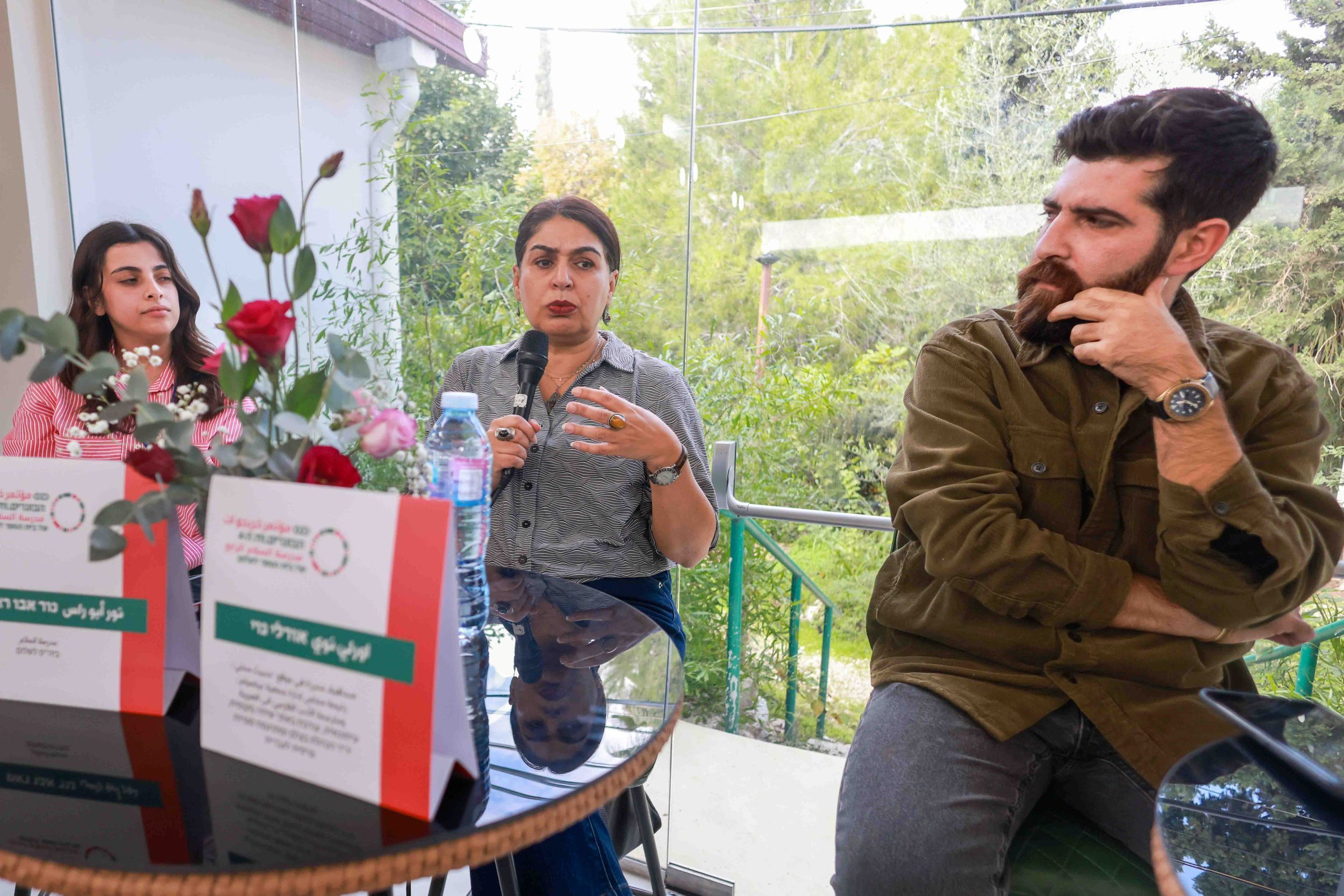
Highlights of the conference included a panel discussion on Friday, Dec. 12, with Orly Noy and Amal Oraby. Oraby is a lawyer, human rights activist and Arabic media professional; Noy is a journalist and political activist. Commenting on the experience, Noy wrote: “Here they talk about everything with no barrier, and they both sides give one another room for pain.”
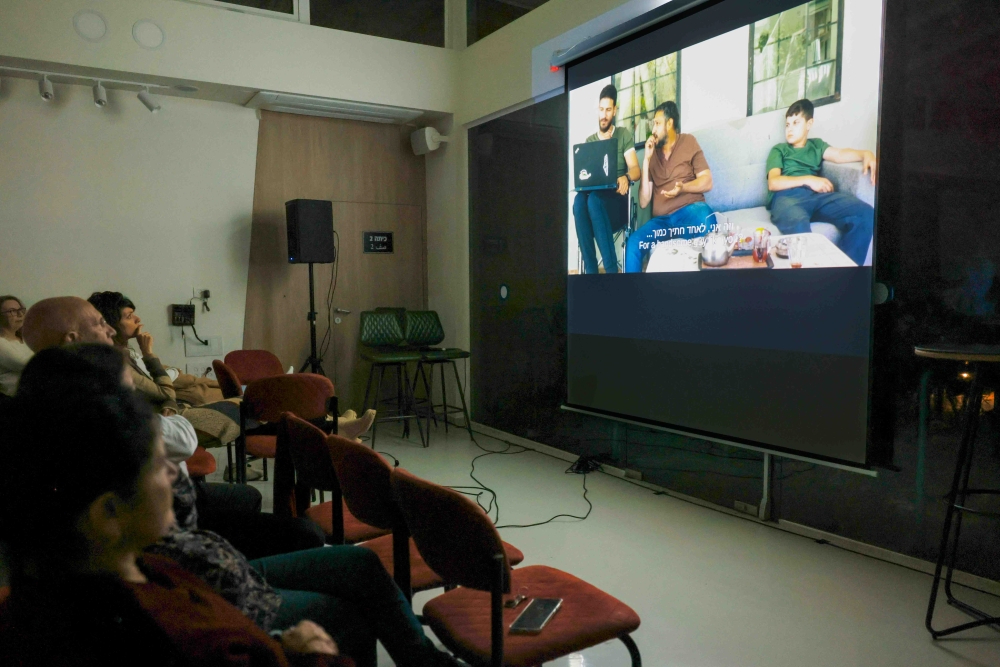
In the evening, the participants watched the film “The Sea,” directed by Shai Carmeli-Pollak, The film, which won five Ophir awards and was selected as Israel’s nomination to the Academy Awards, tells the story of a boy from a village near Ramallah who was not allowed into Israel on a school trip, but who wanted to see the ocean, and so he went in on his own. His father, who worked in Israel without a permit then put his family’s livelihood in danger to go look for his son. Afterwards there was a discussion with the director.
On Saturday, five groups of alumni presented their final projects:
Silence is a crime – of mental health professionals against the war, presented by Noor Abu Ras
Supporting draft refusers and undecideds – presented by Tova Buksbaum
Bitna – Palestinian youth group, presented by Vatifa Knana
Protective Presence – groups of Jewish Israelis who go to shield Palestinian farmers from violence, presented by Eden Fuchs and Zeev Arad
Clean Shelter – an initiative of the foreign dialogue group, to provide shelter and facilities to Gaza, presented by Siba Abu Daka on Zoom. This was very moving, as Siba is from Gaza, though she now lives in Germany, and her mother is still there.
“It’s obvious that we are living in an ongoing catastrophe. People who come for dialogue are those who are looking for an alternative; for something to strengthen them and enable them to have a positive influence on the catastrophe,” said Dr. Roi Silberberg, director of the School for Peace.