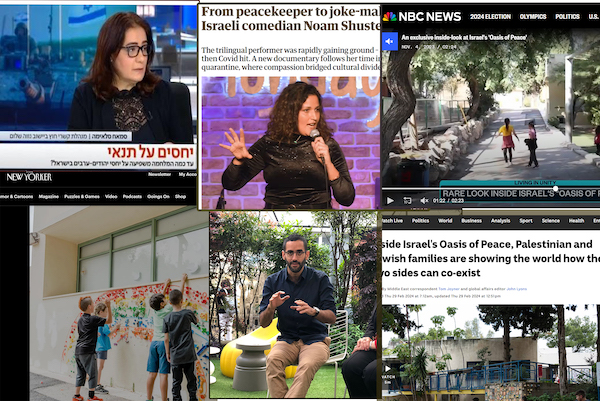
Is there such a thing as a ‘’peace press?’’ What can we do to change the bent of the ‘’news’’ mainstream Israelis consume day and night?
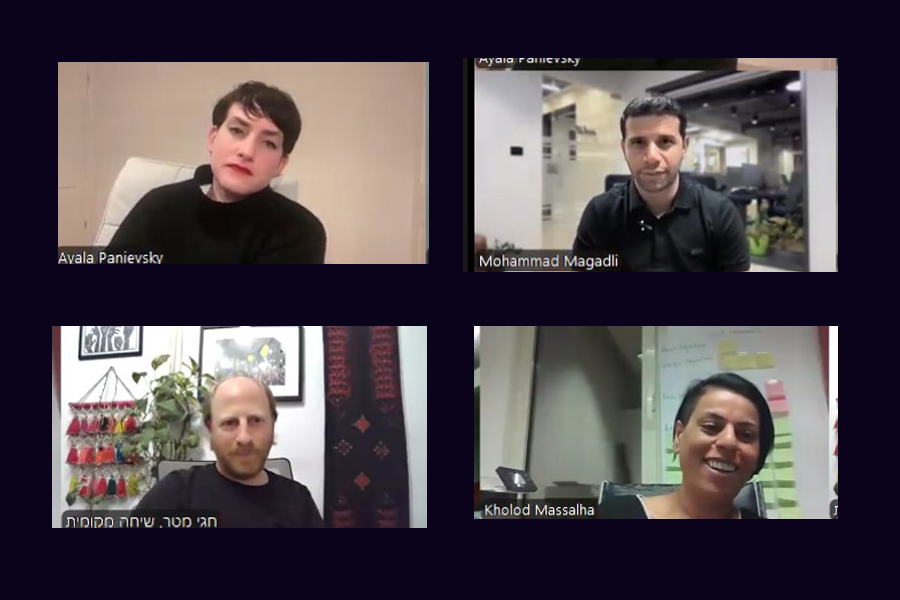
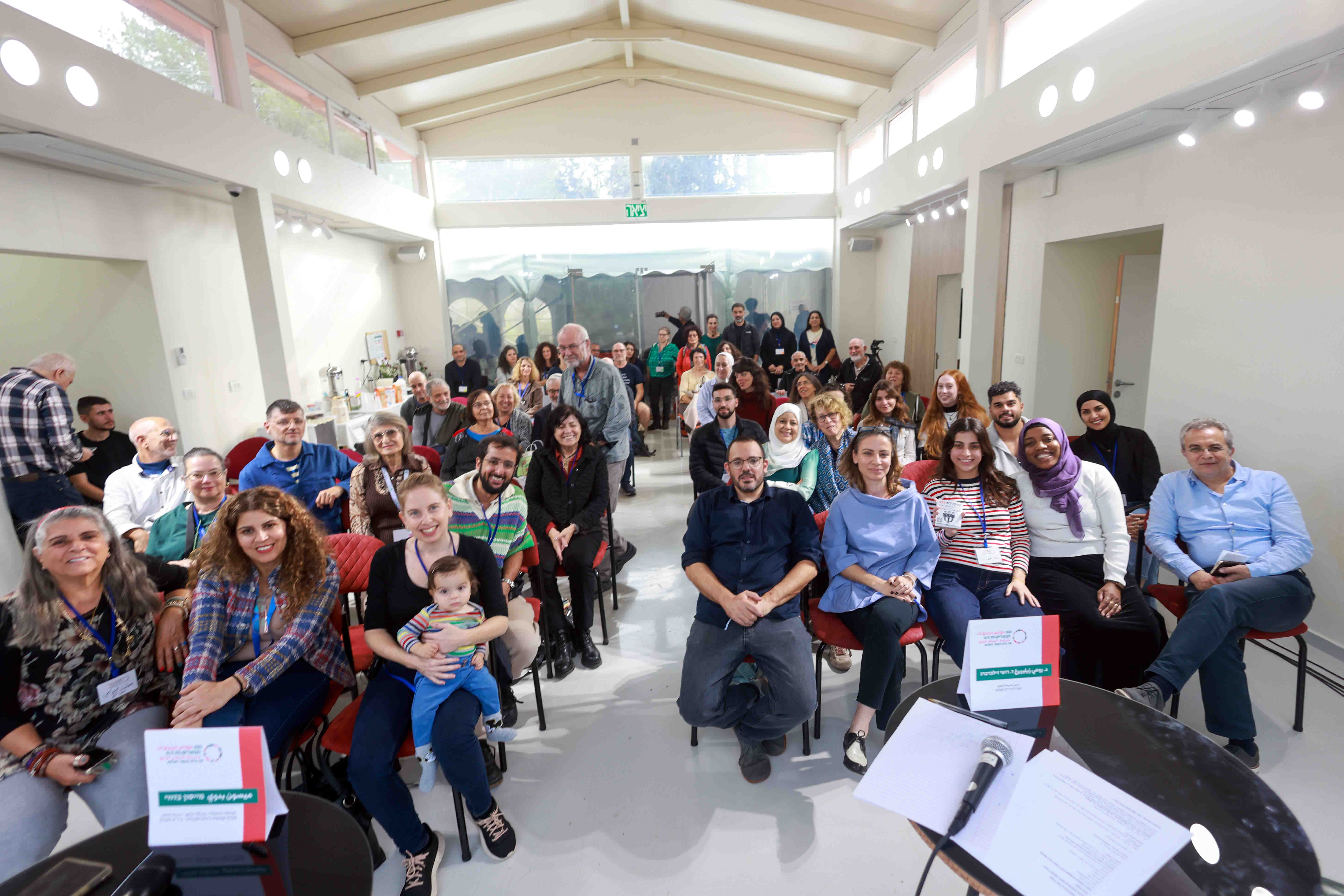
To discuss this question, the Peace Press project brought together several leaders in both the mainstream and ‘’alternative’’ media in a captivating ZOOM session on the evening of October 30.
Samah Salaime, of Wahat al-Salam – Neve Shalom, creator of the Peace Press, opened the session, followed by a short film produced by the Peace Press – Peace is Not a Dirty Word — that uses humor to ask us why we are afraid to talk about peace. (Hint: It is not yet illegal, but it might as well be against the law.)
This was followed by a panel discussion moderated by Kholod Massalha, a journalist. Participating were Dr. Ayala Panievsky, a researcher specialising in media under attack, right-wing populism, and democratic backsliding; Mohammad Magadli, head of the news desk for Nas Radio and commentator on channel 12 new; and Haggai Matar, executive director of Sicha Mekomit and +972 magazine and founder of a forum of Israeli Journalists against the War.
Panievsky spoke about research conducted in her group in the first six months of the war that points to several troubling trends. The mainstream Israeli press has some large blind spots, as she put it, in the way they report the news. On the other hand, they claim they are reporting what the Israeli public wants to hear. This creates a cycle in which the Israeli public does not really care, for example, about the devastation of Gaza or destruction in the West Bank, while the news does not have to tell them about these difficult facts.
All three pointed out that the main problem is lack of professionalism in news reporting, which should include, for example, fact checking and attempting to report on as much of the truth as possible, as objectively as possible. Magadli, used, as an example, the way that the mainstream media portrays the people of Gaza – either rabid Hamas supporters, miserable refugees with all their possessions on their backs begging for a sip of water, or ‘supporters’ of Israel who want this country to eradicate Hamas. The true picture is much more complicated, and creating such stereotypes then plays into narratives that can be highly subjective. He also said that mainstream media has become rigid in its reporting, practically fearful in some ways, and he has personally received thousands of threats in his role as a highly visible Palestinian-Israeli pundit in the Hebrew media.
As in other parts of the world, truth has become relative, and journalists struggle, first and foremost, to uphold standards of truth.
Matar found that his publications, which are meant to give voice to alternative views and stories that are not reported in the mainstream media, had once appealed to a broad segment of the population, but are now viewed as suspiciously left-wing. He described recently investigating the use of AI in the war against Gaza. The mainstream media was not interested, until his team sold the story to the Guardian (at which point, it became big news in Israel, as well).
‘’We have a tiny team, while other news outlets have hundreds of reporters. They all could have done it, but they were not interested,’’ he said.
While there were few prescriptions as to how to help create an environment in which honest, factual, broad reporting can take place, Panievsky pointed out that it is important to keep aiming at the mainstream media as well as the public who consume the mainstream news. There was disagreement about what news should be allowed or removed, but ultimately, all agreed that the problem is that the standards and oversight are applied, if at all, unequally.
Ultimately, said Magadli, if the reporting is more truthful and balanced, and if we can show all sides of a story, we might lead the way to a more peaceful future. That would be his definition of a ‘peace press.’