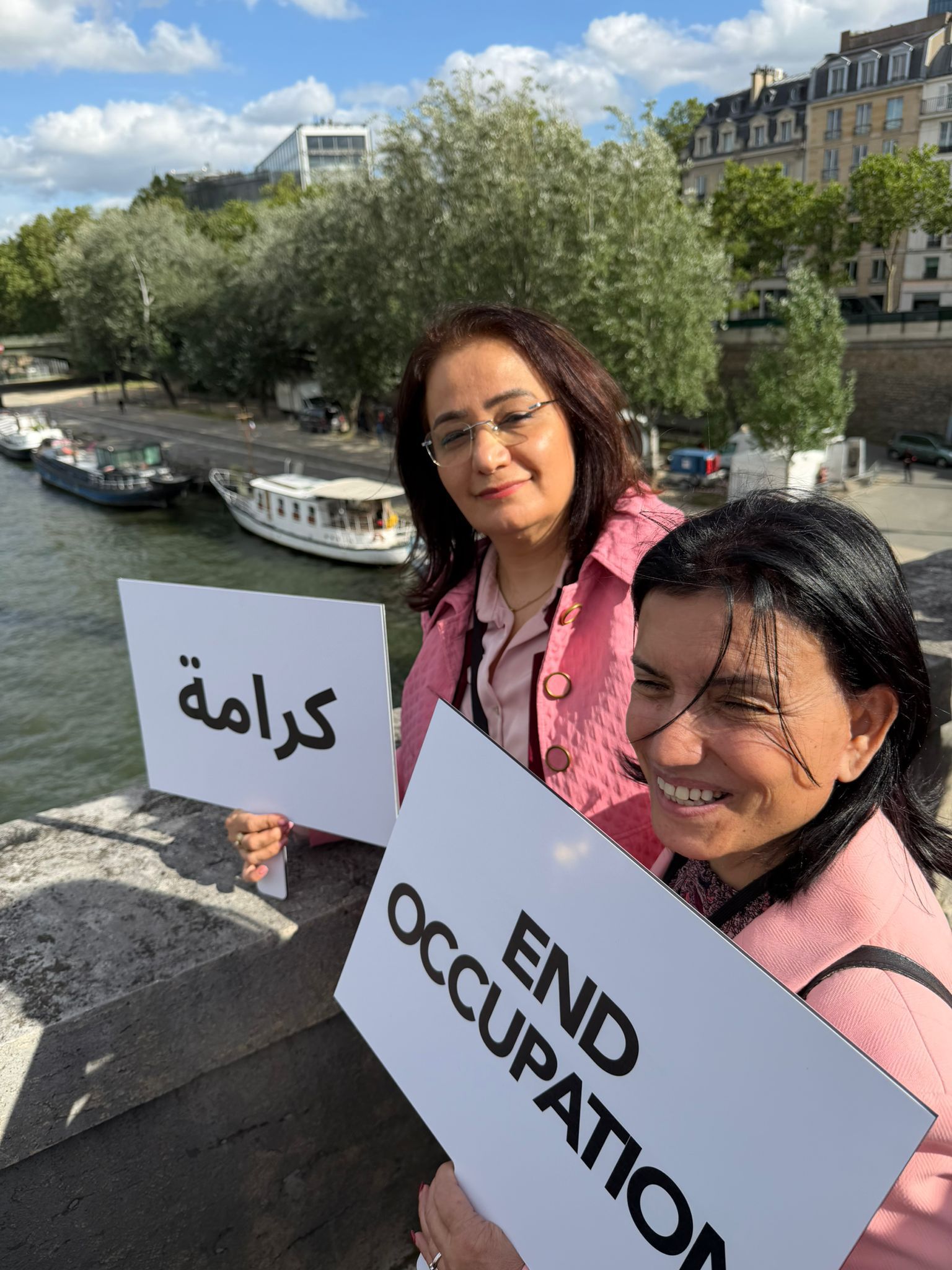
At a conference organized by the French Foreign Ministry, Israeli and Palestinian activists met alongside diplomats from a range of countries. Sticking to traditional positions, the officials were the more cautious participants, while activists pushed the boundaries of the conversation. One thing united them all: an unprecedented level of criticism of Israel
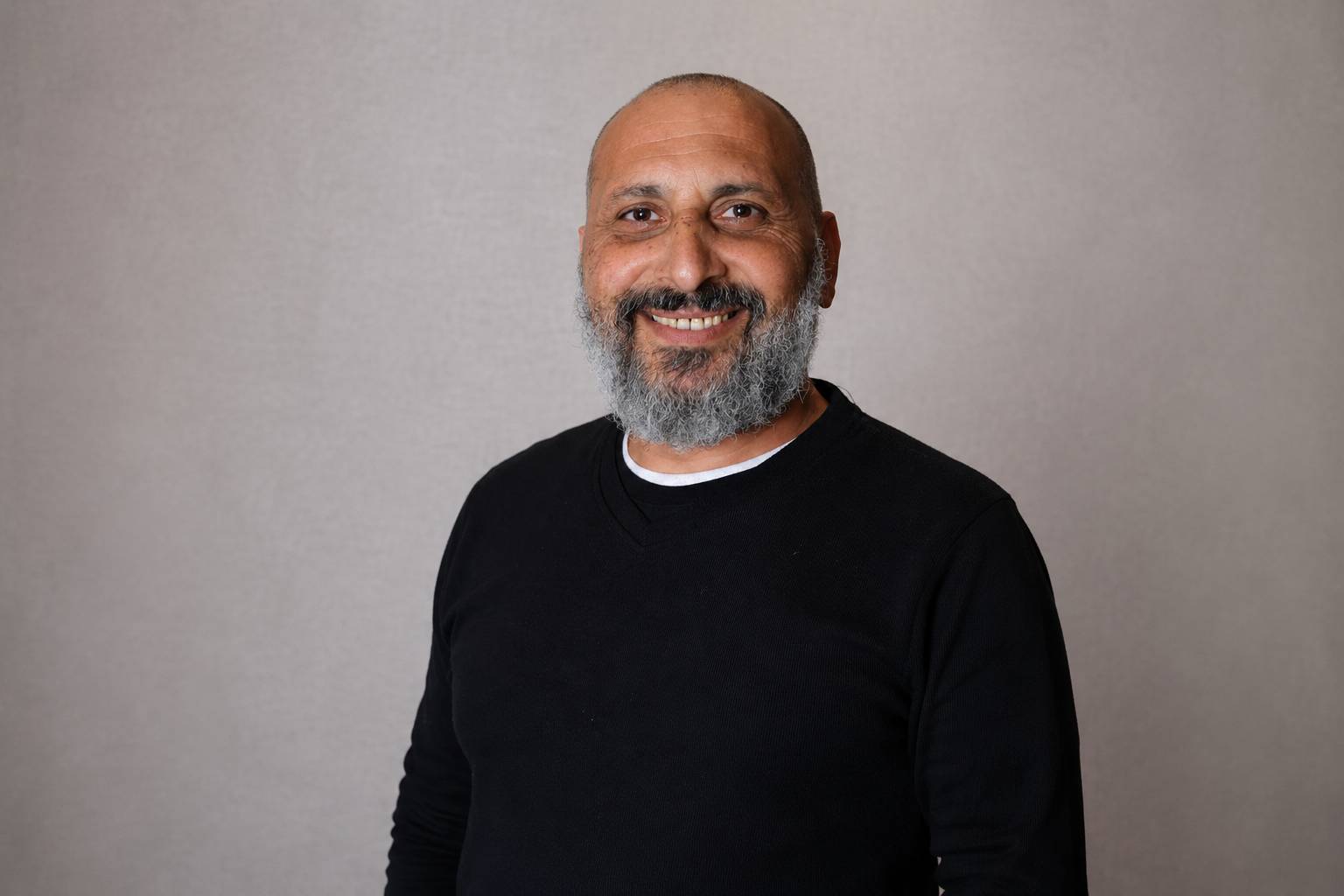
By Samah Salaime and Meron Rapoport
First published in Hebrew in Local Call on 23.6.2026.
Ahead of the G7 summit which took place in Paris last month, both authors of this article joined an international gathering focused on the role of civil society in advancing the cause of Israeli-Palestinian peace. First convened last year as part of the French-Saudi initiative to recognize a Palestinian state, this was the second year the event ran. Around 150 activists from peace and civil society organizations working in education, human rights, and media, gathered in one room alongside foreign ministers, diplomats, and government representatives from over 20 countries.
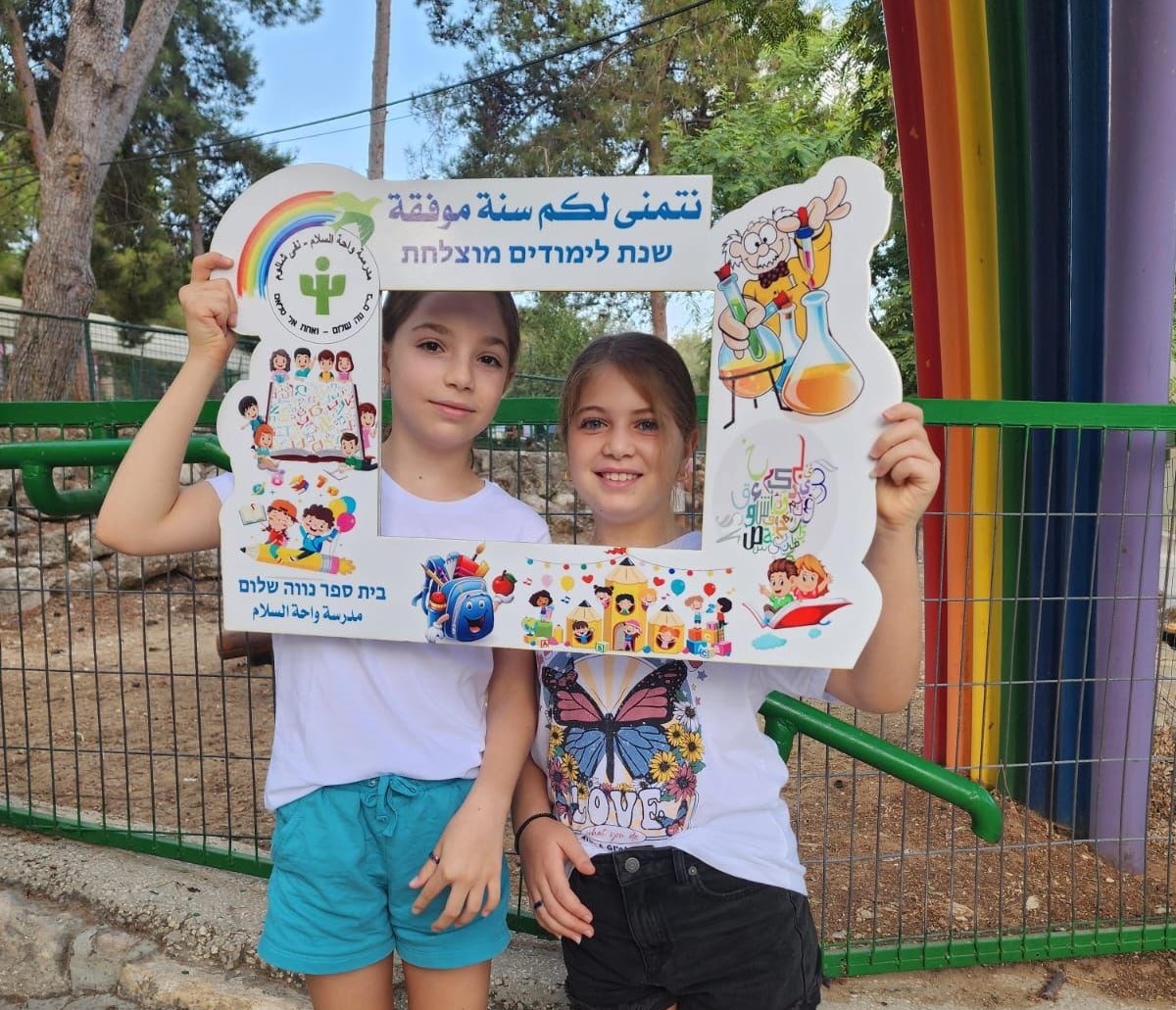
We write these lines from two different perspectives, but from within a shared civic and political space: both of us activists, one Israeli and the other Palestinian. We both write for Local Call, and have spent years working in civil society organizations that seek to sustain an alternative vision in the face of a reality shaped by war, killing, separation, and despair. One of us comes from Wahat al-Salam Neve Shalom, and the village’s bilingual education system; the other from the A Land for All movement.
The gathering in Paris recalled many similar meetings held over the years: a great deal of talk about peace and a two-state solution that seemed detached from the reality of the genocide and destruction in Gaza, and now also the aggression in Lebanon. Not to mention the combined efforts of the Israeli government, military, and settler movement to dismantle what remains of the Palestinian Authority.
But this time, there was something different in the air. Palestinian and Israeli civil society activists did not settle for general talk about coexistence or “our shared humanity.” They went deeper: not discussing one “solution” or another, but focusing on equal rights and the dismantling of Jewish supremacy. Their demands, too, were more concrete: real pressure on Israel and a demand that it be held accountable for its actions. The word “sanctions” came up again and again.
The war of annihilation in Gaza hung over the discussions throughout the conference, including sessions on the humanitarian recovery and reconstruction of the Strip. Gaza was present in the minds of participants, in the position papers, and in the recommendations put forward by civil society representatives. Unlike last year, this year’s gathering also included participants from Gaza.
What follows are several observations drawn from the discussions in the working groups and plenary sessions, and above all from the informal conversations in the hallways—with activists from Israel, the West Bank, Gaza, Europe, and the United States.
Civil Society Outpaces of Diplomacy
One of the most striking features of the conference was the gap between the discourse of civil society and that of official diplomacy. While governments remain cautious, weighing every word and operating within political constraints, representatives from the field spoke in a far more direct, forward-looking, and reality-based language.
In one of the discussions I, Meron, took part in, Christophe Bigot — France’s former ambassador to Israel and now the European Union’s Special Representative for the Middle East Peace Process — said that the EU is currently holding talks with the Palestinian Authority to ensure it implements the reforms demanded by the Union. At one point, I intervened, somewhat undiplomatically, and said that instead of imposing conditions on a battered and weakened Palestinian Authority, the EU should be imposing conditions on Israel and sanctioning it, just as it has sanctioned Russia. Tellingly, not only the Palestinian activists, but also most of the Israelis in the room expressed support.
Jean-Noël Barrot, the French foreign minister, whose ministry hosted the event, was relatively cautious. Other diplomats who took the stage, however — including the foreign ministers of Spain, Brazil, and Luxembourg, as well as Turkey’s deputy foreign minister — spoke much more bluntly. The terms genocide and sanctions were used openly. They stated unequivocally that continued unconditional support for Israel, and silence in the face of the crimes it is committing in Gaza and the West Bank, are no longer morally or politically sustainable. The sharper their remarks, the louder the applause.
Jonathan Zeigen, the son of peace activist Vivian Silver, who was killed in Kibbutz Be’eri, also addressed the plenary session, arguing that Israel enjoys preferential treatment. “How many people need to die before policy changes, before sanctions are imposed? How long do you [the international community] expect us to keep trying to change reality while you continue to support it?” he asked.
The stated goal of the Paris gathering was to allow representatives of Israeli and Palestinian civil society to speak directly with decision-makers and offer them guidance. Accordingly, the panels featuring foreign ministers — around 15 in total — opened with recommendations from Israeli and Palestinian speakers. Even if this was partly symbolic, it seemed to reflect a recognition within the international community that it is no longer enough to engage only with Israeli or Palestinian politicians; civil society, too, must be part of the conversation, even when it is more critical and independent.
There appears to be a growing understanding among international actors that no serious peace process can be built through engagement with governments alone — especially when those governments are themselves central to the crisis and driven by short-term political interests. If a different future is to be imagined, civil society must be part of the planning, not only the implementation.
No Quick Fixes: Direct Dialogue Between People Is Essential
For years, people-to-people initiatives were criticized as superficial, naïve, or as vehicles for normalizing the occupation. Some of that criticism was justified: emotional encounters between individuals cannot substitute for justice, equal rights, an end to the occupation, or political change. But the physical and psychological separation imposed on Israelis and Palestinians over the years has created a reality that is no less dangerous: two peoples who talk about one another, but rarely with one another.
It is no surprise, then, that nearly every program that facilitated some form of direct contact between the two sides came under attack, was vilified, and was gradually dismantled — youth programs, joint training initiatives, and direct dialogue between students and educators. It is hard to believe that Israel’s Ministry of Education, which once funded such programs, now portrays a lecture by the Parents Circle–Families Forum as a threat to the consciousness of Israeli students.
At the conference, there was a palpable longing for direct contact — for conversation without fear, without self-censorship, and without silencing. This was not only about moving encounters between Palestinians and Israelis, important as they may be — such as the exchange between a bereaved Jewish mother and a bereaved brother from Hebron. It reflected a deeper recognition: without a space in which people can think together, argue, express anger, grieve, develop a shared language, and imagine a future, it is impossible to build a common vision.
Trauma Is Not a Side Issue. It Is Part of the Solution
Today, it is impossible to talk about peace, recovery, or the future without talking about trauma. Nearly every conversation I, Samah, had with an activist or representative from Gaza ended in tears, choked voices, or heavy silence. This is not merely personal trauma; it is a collective Palestinian burden. The accumulated and historical trauma carried by Israelis was also present in every room and conversation, and it will continue to shape any solution placed on the table, consciously or otherwise.
Political discussions tend to postpone questions of mental health and emotional recovery to a later stage — after a ceasefire, after an agreement, after physical reconstruction. But this is a mistake. Any future solution must include collective psychological healing, recognition of pain, frameworks for collective processing, and deep engagement with memory, grief, and loss. Without these, even the best agreements will be written on the thinnest of paper.
The Consensus Against the Israeli Government Is Expanding
Throughout the conference, it was difficult to ignore the fact that a near-consensus has emerged against the Israeli government. The criticism is no longer confined to radical fringes or human rights organizations. It is voiced by diplomats, civil society groups, experts, journalists, and government representatives alike.
Comparisons between the actions of the Israeli government and those of Hamas — once considered taboo in some diplomatic circles — have become possible. The scale of the killing, destruction, starvation, and dehumanization in Gaza has made it increasingly difficult to sustain that imagined moral distinction.
World Remains Stuck on Two States, While Civil Society has Moved Beyond It
The diplomatic world still favors the two-state formula, clinging to the familiar, official language. In Paris, too, it was clear that the international community struggles to think outside this box, even though the reality between the river and the sea has changed profoundly.
Civil society, however, is already operating from a more complex and forward-looking place. It does not necessarily abandon the framework of “two states for two peoples,” but it fills it with a different political imagination: equal rights, freedom of movement, mutual recognition, justice, personal security, and an acknowledgment that neither people is going anywhere.
Perhaps the most important thing said in Paris was also the simplest: the future of the two peoples is a shared future. The French foreign minister argued that a two-state solution for two peoples remains important because the future of the two peoples is one. One may disagree with the first part of that statement, but the second is impossible to deny: our destinies are intertwined.
This is not a slogan. It is reality. The question is whether we will continue to deny it through more wars, walls, and separation, or whether we will finally begin to build a new political reality from that recognition.